
THE POWER OF
MOLECULAR HYDROGEN WATER
Scroll to the bottom of this page to find some examples of the research on Hydrogen Water.
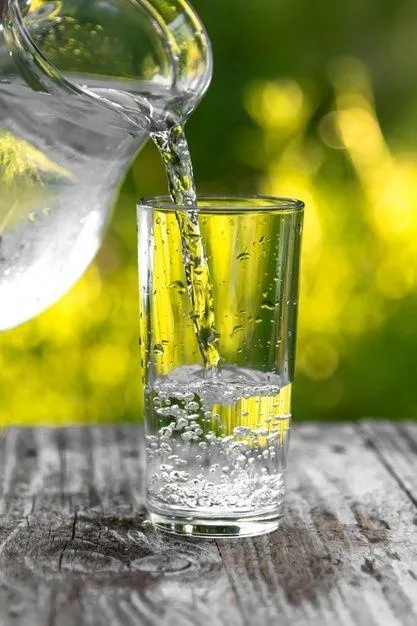
Living, Structured, Hydrogen-Rich...
Hydration is essential, but not all water is the same.
Molecular hydrogen water is regular drinking water that has been enhanced with dissolved hydrogen gas (H₂), the smallest and lightest molecule in the universe.
Unlike vitamins or plant-based antioxidants, molecular hydrogen is a selective antioxidant. Its small size allows it to diffuse rapidly into tissues and cells, where it may help support the body’s natural defence systems against oxidative stress.
What Makes It Different?
Modern life exposes us to more than we realise - pollution, stress, processed food, poor sleep. All of this contributes to oxidative stress in the body.
Oxidative stress happens when there’s an imbalance between free radicals (unstable molecules) and the body’s ability to neutralise them. Over time, this imbalance is associated in scientific literature with ageing and various chronic health issues.
Molecular hydrogen has been studied for its potential antioxidant properties. Because it’s the smallest molecule in existence, it can dissolve easily in water and move quickly throughout the body once consumed.
Research - cited at the bottom of this page - has explored how dissolved hydrogen may help reduce oxidative stress at a cellular level. Studies are ongoing, and hydrogen water is not a medical treatment, but interest in its role in supporting overall wellbeing continues to grow.
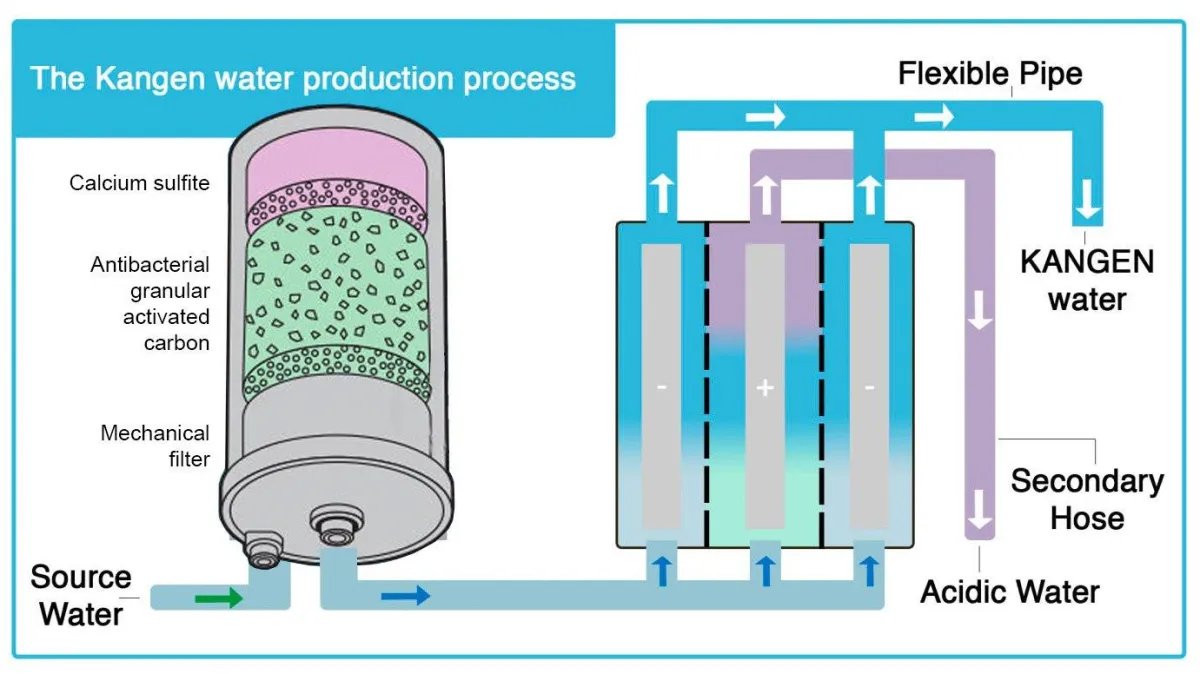
How Molecular Hydrogen Water is Made.
Before anything else, the water is filtered.
This system uses multi-stage carbon filtration to reduce chlorine, sediment and certain common tap water contaminants. This matters, because electrolysis works best with properly filtered water, and you don’t want to concentrate unwanted substances.
After filtration, the water passes through an electrolysis chamber.
Inside that chamber are metal plates, specifically titanium coated with platinum. When an electrical current is applied:
Water (H₂O) is split into hydrogen (H₂) and oxygen (O₂).
The hydrogen gas is generated at the negatively charged electrode (the cathode).
Oxygen and other by-products are directed away.
Some of the hydrogen gas dissolves back into the flowing water.
This dissolved hydrogen gas (H₂) is what defines molecular hydrogen water.
Why Platinum-Coated Plates?
The use of platinum-coated titanium plates improves conductivity and durability.
Platinum is highly resistant to corrosion and helps the electrolysis process occur efficiently and consistently. The number and surface area of plates can influence how much hydrogen is generated.
That’s why build quality matters. No machine produce the same concentration of dissolved hydrogen, as this system does.
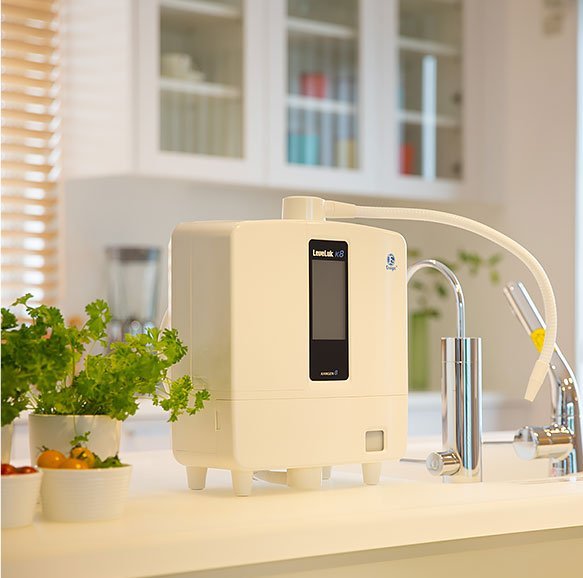
The Result...
Clean hydration, actively working for you.
What comes through the tap at the end of this process is filtered water enriched with dissolved molecular hydrogen - a stable, neutral gas that has been widely studied for its antioxidant potential.
Because hydrogen is the smallest molecule in existence, it diffuses quickly once consumed. Research suggests it can move easily through cell membranes and support the body’s natural response to oxidative stress.
In practical terms, this means you’re not just hydrating - you’re hydrating with intention.
The water still performs its fundamental role:
- Supporting normal energy metabolism
- Aiding nutrient transport
- Helping maintain temperature regulation
- Contributing to overall cellular function
But with dissolved hydrogen present, it also delivers an additional layer of antioxidant support that standard water does not provide.
For a health-conscious household, that matters.
You drink water every single day. It’s one of the few things that goes into your body consistently, without fail. In fact, the human body is made up of majority water.
Choosing water that not only hydrates but also aligns with a proactive, health-conscious lifestyle simply makes sense.
It’s still water at its core - essential, foundational, necessary.
Working to support you and positively impact your health.
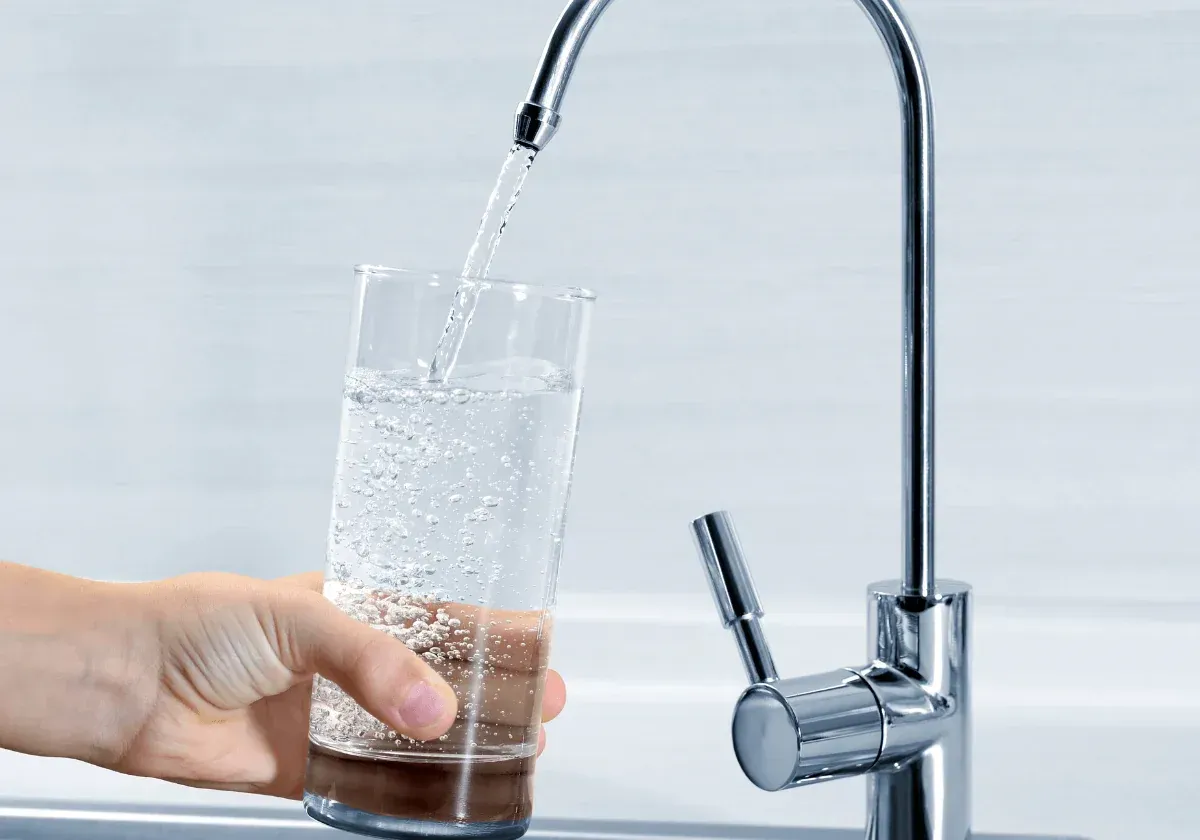
Tap Water
UK tap water is often considered safe to drink, but reports have shown that it contains trace levels of heavy metals such as lead (from older pipework), copper and aluminium, along with residues from pesticides, industrial pollutants and pharmaceutical compounds - including synthetic hormones from contraceptive medications that enter waterways through wastewater.
Long-term exposure to elevated levels of certain heavy metals has been associated in scientific literature with neurological effects, developmental concerns and cardiovascular issues, while endocrine-disrupting chemicals have raised questions about potential hormonal impacts. Although these substances are typically present at low concentrations, a reliable filtration system is imperative, to reduce cumulative exposure over time.

Bottled Water
Bottled water is often marketed as purer, yet it’s subject to similar environmental exposures and contains microplastics from packaging. It also sits in plastic for extended periods, sometimes in warm storage or transport conditions, amplifying the microplastic contamination. Beyond the water itself, there’s the environmental cost - single-use plastic, transportation miles and unnecessary waste. It’s convenient, yes. But as a long-term hydration solution for a family, it’s neither sustainable nor superior.
The Research
Pesticide Residue Reduction
Copyrights 2026 | Suzanne Jackson | Terms & Conditions